Cross-Country Skiing in Lapland — A Guide to the Best Tracks
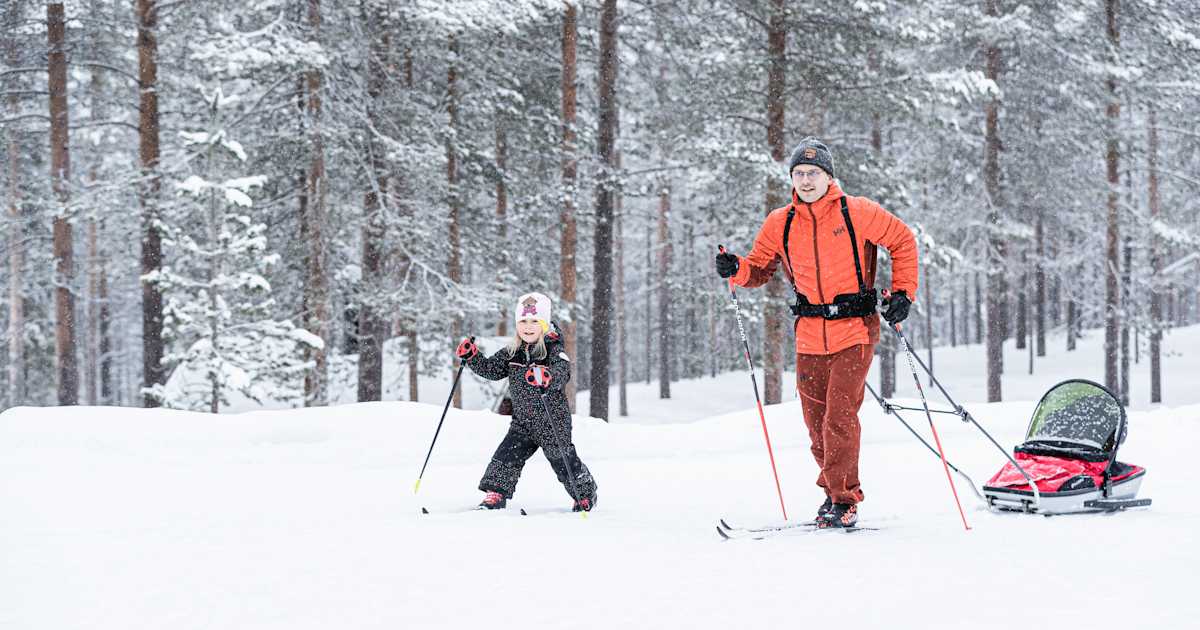
Cross-country skiing is one of Lapland's most traditional and rewarding winter activities. Silent gliding through snowy forests, views over the fells and pure frosty air make the experience unforgettable. Lapland's ski resorts have a total of over a thousand kilometers of maintained trails, and the season typically lasts from November to May.
Why ski in Lapland
Compared to southern Finland, Lapland offers a longer ski season, thicker snow cover and landscapes that are not found elsewhere. The trails run along fell slopes, through deciduous forests and river valleys, and on many routes you can ski for hours without meeting a single other skier.
Lapland's resorts maintain their trails daily, which means that the tracks remain good even on frosty days. Most destinations also have floodlit trails, which allow you to ski in the dark during the twilight hours.
Best ski resorts
Levi Levi is one of Finland's most popular ski destinations, with a network of trails covering around 230 kilometres. The trails run both on the slopes of the fells and in the surrounding forests, and there are difficulty levels from beginner to competitive skier. There are over 30 kilometres of illuminated trails.
Ruka Ruka is known as the first place in Finland where you can ski on natural snow — typically as early as October. The trail network is around 120 kilometres, and routes start directly from the Talvikylä area towards Oulanka National Park. Ruka is also the home of FIS skiing.
Saariselkä In Saariselkä, the trails connect to the Urho Kekkonen National Park, so you can extend your trips into true wilderness. There are over 200 kilometres of trails, and the views on the fell slopes are perhaps the most stunning in Lapland. For skiers who want long days surrounded by nature, Saariselkä is the number one choice.
Ylläs Ylläs has the longest continuous ski trail network in Finland — approximately 330 kilometers. The trails extend into the Pallas-Yllästunturi National Park, and the landscapes of seven fells offer variety for a whole week of skiing vacation. The trail maintenance is exceptionally good.
Pyhä Pyhä is a smaller resort, but its trail network is pleasantly compact and well-marked. The trails in Pyhä-Luosto National Park connect to the center's trails, and the landscapes in the ancient deciduous forests are unique. A good choice for skiers who crave peace.
Iso-Syöte Iso-Syöte is the southernmost fell in Finland and surprisingly easy to ski. The trail network is approximately 120 kilometers long and covers both fell trails and lower forest trails. The location is good for those coming from southern Finland.
Rovaniemi Rovaniemi's trail network is most extensive in the Ounasvaara and Arctic Circle areas. There are about 150 kilometers of trails, and you can get to the slopes directly from the city center. Rovaniemi is especially suitable for those who want to combine skiing with a city vacation.
Classic or freestyle
Almost all of Lapland's trails are maintained for both classic and freestyle. Classic is easier for beginners, because the movement resembles natural walking and the skis stay in the groove. Freestyle (skating) is faster, but requires more balance and fitness.
If you have skied little or not at all, we recommend starting with the classic style. Most ski schools offer one or two-hour basics that are a good start to your vacation.
Equipment and rental
All of Lapland's ski resorts have equipment rental shops where you can rent skis, poles and boots for a day or a whole week. Rental prices vary between 25–40 euros per day. Premium rental companies offer newer equipment at a slightly higher price, but the difference is especially noticeable on long trips.
If you ski regularly, it pays to bring your own equipment. When choosing a ski, your weight, skiing style and skill level are taken into account — ask a local professional for advice if you are unsure. Lubricating your skis is important in the freezing temperatures of Lapland, and many rental companies also offer maintenance services for your own equipment.
Ski schools
Almost every resort has a ski school, which offers both private lessons and group lessons. A basic beginner course typically lasts 1.5–2 hours and costs 50–80 euros. A private lesson costs around 60–100 euros per hour. There are special groups for children, where the lessons are taught in a playful way.
Ski school is especially worth it if you want to try freestyle for the first time, or if your technique needs polishing. A couple of hours with a teacher will speed up your progress much more than a week of self-study.
Best time to ski
The ski season in Lapland starts in November and lasts until May. Christmas and January are the times of short days, and then floodlit trails are especially important. February, March and April are classic skiing months: the days get longer, the sun shines, but the snow conditions are still excellent.
May is the month of snow skiing — get your feet in the early morning and early evening, and your skis will glide exceptionally well. This is the favorite month of the locals in Lapland, and the views in the sunny, rolling landscape are unique.